Guides · United States
Marriage license guides, state by state
How the marriage license works in your state: where to apply, waiting periods, who can officiate and what happens after the ceremony, with official sources.
1 guide · By Caitlin & Nicolas
Start for free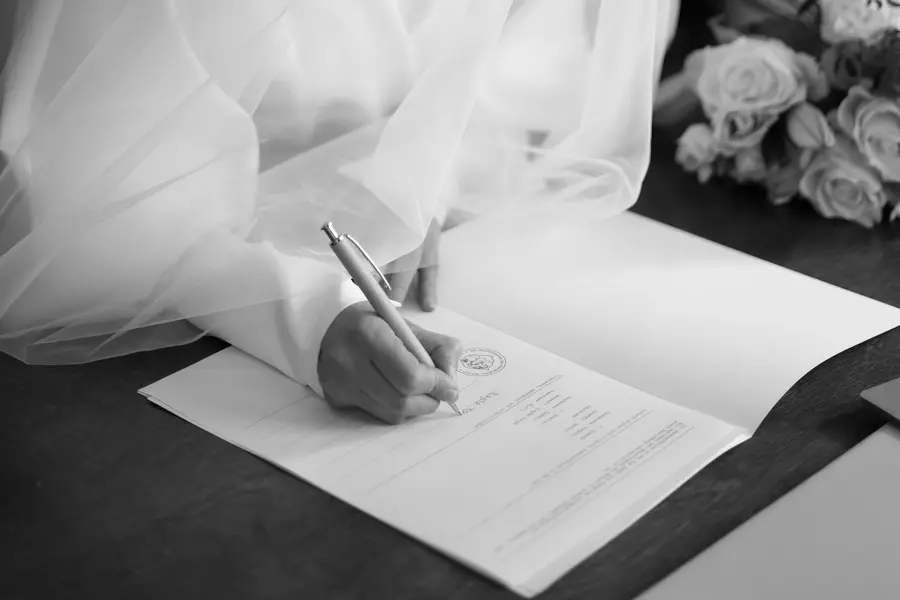
Recommended reading
Marriage License Requirements by State: How It Works, With Official Sources
How a US marriage license works, state by state: waiting periods, how long it lasts, example fees and who can officiate, each linked to the official source.
8 min readInvitationsHow to Address Wedding Invitations (With Examples to Copy)
How to address wedding invitations: outer and inner envelopes, couples with different last names, families, plus-ones, doctors, judges, military and clergy.
7 min readInvitationsWedding Invitation Wording: Examples for Every Kind of Host
Wedding invitation wording to copy, by who's hosting: the bride's parents, both families, the couple, divorced parents or a late parent. Formal and relaxed.
7 min readStart here
The legal part of an American wedding comes down to one piece of paper: the marriage license. Your state decides the rules, your county (or city) issues it, and someone with the right authority signs it after the ceremony. It isn't hard, but it has a start date and an end date, and those are the two things couples get wrong.
General guide only. Marriage laws and fees change, and counties differ. Check with the county clerk where you'll get your license before you rely on any figure here.
Last checked: 24 November 2026. Each figure on this page comes from an official state or county page, linked in our state-by-state license guide.
The order to do things in
1. Pick the state, then find the office. The license comes from the state where the ceremony happens, not the state you live in. Search for the county clerk (in some states, the probate court or city clerk) for the place you're marrying and bookmark its marriage page. It beats any blog, including ours.
2. Choose your officiant early. This is the decision with the most legal weight. A judge or a clergy member is straightforward almost everywhere. A friend ordained online is fine in many states, but not all. If you're unsure, ask the clerk before your friend says yes and starts writing.
3. Work out your license window. Two numbers decide when you apply:
- The waiting period: how long after the license is issued before you can marry. Many states have none. New York has 24 hours. Texas and Pennsylvania have three days.
- The expiry: how long the license lasts. Hawaii's runs 30 days from pickup and Colorado's 35. New York, Pennsylvania, Florida and Illinois give you 60. Texas and California give you about 90.
The rule of thumb: apply three to five weeks before the wedding. That's late enough to stay inside a 35-day window and early enough to fix a missing document. If your state's window is 30 days, go in the last two weeks.
4. Book the appointment. Many offices now work by appointment, some by video, and most keep weekday hours. If you're traveling to marry, put the clerk's visit in your itinerary before you book flights. Hawaii, for example, has you meet a license agent in person, together, before the ceremony.
5. Gather what you need. Photo ID for both of you, the fee, and details of any earlier marriage. Some offices want your Social Security number. If you're claiming a discount for a premarital course, as couples can in Texas and Florida, bring the certificate.
6. Get married, then make it official. On the day, you, your officiant and any witnesses sign the license. The officiant sends it back to the office, often within 10 days. Once it's recorded, order certified copies, because they're what Social Security, the DMV and the passport office will want if either of you changes your name.
Our license requirements by state guide puts the waiting periods, expiry dates, example fees and official sources side by side.

Choosing an officiant
| Who | Good for | Check first |
|---|---|---|
| A judge or court officer | A simple, legal ceremony, often at the courthouse | Booking times and how many guests can come |
| Clergy | Couples marrying in their faith | Any classes or meetings the congregation expects |
| A professional officiant | A personal ceremony anywhere | That they're registered where the state requires it |
| A friend or relative | The most personal option | That their ordination counts in your county |
| Yourselves | Small weddings and elopements | That your state allows it (Colorado, Pennsylvania's self-uniting license and DC do) |
A few states add their own steps. Hawaii wants every officiant to hold a Hawaii license. Virginia's circuit courts must authorize ministers, and Fairfax County won't accept online ordination. Tennessee's law bars ministers ordained online. Whoever you choose, give them the license return deadline in writing.
Courthouse or ceremony?
A courthouse wedding is quick, cheap and legally complete. Many clerks marry couples by appointment for a small fee. The catch: rooms are small, guest numbers are capped, and popular dates like Valentine's Day go early.
A full ceremony lets you choose the place, the words and the guest list. It takes more planning, and it puts the legal side in your officiant's hands, so pick one who's organized.
Doing both is common. Some couples marry at the courthouse on a weekday so the paperwork is done, then hold the celebration later with family and friends. Say so on your wedding website so guests know which day is which.
Where couples often marry from out of state
Three states make a trip easy, each in its own way:
- Nevada: no waiting period, and the Las Vegas license bureau is open every day until midnight.
- Colorado: no waiting period, and couples can marry themselves without an officiant or witnesses.
- Hawaii: no waiting period, but you meet a license agent in person and your officiant needs a Hawaii license.
Common mistakes
- Getting the license too early. In a 30- or 35-day state, a license picked up six weeks out has expired by the wedding.
- Forgetting the wait. A three-day wait means a Thursday license isn't good for a Saturday wedding.
- Assuming a friend's online ordination works everywhere. It doesn't, and an officiant without authority can put your marriage's validity in doubt.
- Losing track of the return. If the license never reaches the clerk, there's no record. Give your officiant a stamped, addressed envelope.
Where to start
Read the state-by-state license guide first, then the state page for where you're marrying. When you add your date to your wedding planner, the checklist puts the license in the right month, so you aren't counting days by hand.